Tuesday, March 14, 2017

Ruins Old and New


January 25, 2017

We took it easy on Wednesday. Joanna had some glitch with her car insurance. A combination of an unresponsive agent and some unanswered questions took a while to sort out. 

Using the Skype program on my Mac, she called the customer service number for the insurance company and learned that she was OK.

She had paid the agent and told him to pay her insurance premium on time. The agent merely sent the money (minus his cut) to the company.

Like so many companies they let computers make judgments. The company refunded the money because it had been paid weeks too early. 

She couldn’t even pay it on Wednesday because the payment isn’t due until March 1, and it was still to early to be accepted. Things are bizarre when a company refuses to be paid in advance. 

So it was 2 o’clock before we got out. We walked in a different direction and finally came to the main street of modern Pompei, where we bought some fruit.

All along the way there were square buildings with old, peeling stucco. It’s almost, but not quite picturesque. 


The weather is chilly, with daily highs in the 50s, but the climate supports cactus, palms, and agaves.

We stopped at the church again, a highly detailed interior that includes bas reliefs of angry bishops sticking their heads out from frames over the nave. A brochure says there is a painting behind the altar about the Battle of Lepanto, but we didn’t go up to see it because there seems always to be a novena in progress at the front of the church.

So we repaired to another bar named for a church—this one, the Bar Santuario.


Zeppole, espresso, vino rosso, all very good.

We went back to the hotel, where I took a nap. 

We had seen the sign for a restaurant called the Garden of the Hesperides (il Giordano delle Esperidi) very close to the hotel. I found its website and it looked like an interesting upscale place, and it even had Taurasi wine, something Larry had told me was top regional variety made of aglianico grapes.

We strolled over there. The signs at the entrance to the parking lot were on, but then everything else was dark. 

There was a notice posted on the gate. I couldn’t make most of it out, but it did say something about January 25.

So we started walking toward the center of town. We found a Greek place, but the music and TV were far too loud and we didn’t see anything on the menu that appealed to us.

We wound up walking all the way back to the church plaza before we found a place to have a meal. That’s a long walk in Europe without an eatery.

The restaurant is a family-owned place called Al Gamberone, which sounds like somebody you could know in New Jersey, but I believe it means something like “The Prawn.”

The Nonna came over and started pointing things out on the menu. I don’t know if she was rushing us or trying to be helpful. In any event, I asked her to give us some time alone with the menu.

We found carbonara. Almost real carbonara, no cream, just eggs. It used bacon instead of guanciale and there was onion, maybe a little too much of it. But it was the closest to Roman carbonara that I have been able to get since we left Rome.

We shared an order of it and a huge plate of broccoli rapa. Then we ordered a second carbonara.

We had it with a two-year-old Sorelli Chianti that was very smooth going down.

There were no taxis in sight, so we hiked back to the hotel and passed out.


Jan. 26

We were out of the hotel before 11 on Thursday. The hotel gave us a lift to the light rail station at the far side of the Pompeii ruins. This is by the main gate, named for the Villa of the Mysteries. It’s the gate where all the buses park.

We took a train to Ercolano Scavi, the Ruins of Herculaneum. It really does look like Cambodia here, guys.

There are piles of trash on the tracks.

There’s graffiti everywhere, so much that we got off at the wrong stop and couldn’t tell because all the signs were obscured by spray paint.

I asked some passengers waiting on the platform in my Spanish Italian, “Esa stazione Ercolano?” With a few tries, we managed to peer over the language barrier far enough to learn that we had to go one more stop.

The ruins are straight downhill from the right station. 

The excavated part of Herculaneum is much smaller than Pompeii. Some of of the old town is under the new town and has been explored by tunnels, which are closed to the public. The excavated section leading down to the ancient beach is about three stories high.

It had been buried under perhaps a hundred feet of ash, which preserved not only the stone and brick buildings, but also organic matter, including human skeletons and furniture. 

The ash also extended the shoreline by perhaps a quarter mile. So now there’s only swampy ground where there used to be seawater.

Some of the beams in place are charred originals. Some of the amphorae are still in place, but most of the removables have been taken to the Archaeological Museum in Naples.

A major restoration is under way because at one point, maybe 20 years ago, the walls had become so unsafe that about two-thirds of the place was off limits to the public.

Masons were working on a couple of walls while we were there.


Like Pompeii, most of the buildings consist of empty rooms. Some are closed and a few are open. Many of those contain colorful murals and carved reliefs.

In its high days, this was my kind of place, with lots of bars and places to eat. Joanna took a photo of me standing appropriately enough behind the one known as the large bar.


A few doors away is another with a faded image of Priapus on the wall to ward off the Evil Eye.

The excavation at the old beach level uncovered about 300 skeletons huddled in warehouses by the water. People had run there and were hoping to be rescued, but the gases and ash overtook them before help came. 


Today, a huge wall of hardened ash stands on what used to be the edge of the Tyrrhenian Sea.

I assume the skeletons in the warehouses now are replicas. The originals would be too valuable for research to leave there. 

We climbed to the rail station and trained back to Pompei, where we took a taxi to the hotel. We had walked in the ruins for more than three hours and I was sore from the hips down.

All I wanted to do was crawl into bed. So I did. We got up around 8 and went out for dinner. 

Esperidi seemed to be still closed, so we went back to Maccarone, across the road from the hotel.

We shared ravioli filled with salt cod, a grilled pork chop, and grilled zucchini. I had a bottle of Aglianico, which Larry called “the noble red grape of Campania.” Noble indeed.

Back to Pompeii tomorrow. 

Love to all.

Harry


Jan. 27
Harry: I once asked my Aunt Boski, wife of my uncle George Antheil, what James Joyce was like and she simply replied that he was always impeccably dressed!
Art


Friday, March 10, 2017

Under Vesuvius


January 23, 2017

We blew into Pompei feeling just like volcanic ash: burned out and wanting to lie down.

We left Newark almost an hour late. I couldn’t make out all the details, but there may have been a computer glitch that kept the plane from getting its flight plan or something like that. 

We were sitting on the approach to the runway. At first, the captain said we’d have to taxi back to the terminal to get a paper copy. Instead, we sat for maybe 40 minutes, until the transmission apparently came through.

I wasn’t too concerned. We had to change planes in Munich, but had a layover of almost four hours.

On the way we got a glimpse of the Bavarian Alps.


We got there less than an hour behind schedule, so I had time for coffee and a beer for breakfast. Not as wild-ass as it sounds. It was about 1:30 a.m. back home, so the bars were still open.

I’m glad we were only changing planes in Munich because Bavaria had snow on the ground. Hell, I could have stayed home if I wanted to see that.

When we landed in Naples, Plan A was to take a cab to a rail station at Piazza Garibaldi and then a 40-minute train ride to Pompei, the modern city, which is spelled with one “i”.

Remember, we left Newark sometime around 6:30 p.m. Eastern Time and got to Naples International around noon the next day, or about 6 a.m. in New Jersey. We got maybe a couple of hours’ sleep on the way.

We love train rides in Europe, but neither of us was up to it, so we took a cab all the way to the hotel.

There was something uncannily familiar about Naples as we rode through it. The highway had a deja vu feeling, too.

Then it hit me. The streets and especially the buildings projected a sense of malaise and decay. Walls were covered with soot and rust. Stucco was peeling.

The place looks like Cambodia. I was having flashbacks to Phnom Penh.

The driver snapped me out of that state of mind now and then. He proudly pointed out Vesuvius, and then as we came into town, the ruins of the old Pompeii. He even gave us a discount—80 euro vs. the standard 90 for the trip.

When we checked in at the hotel, the lady at the desk gave us abundant information, including detailed walking directions, about visiting the Classical ruins.

We went upstairs and went to sleep for a couple of hours. 

Dinner was at a restaurant across the road. The restaurant is called Maccarone, and may be affiliated with our hotel. 

The menu is short, but interesting. We had grilled octopus with ginger cream sauce as an opener. It was rich, and the ginger stayed in the background.

We ordered two main courses, which we shared. One was rigatoni and cauliflower and balancing that was cuttlefish with chick peas. 

Cuttlefish is very close to squid, which can be tough. So can octopus, but both cephalopod dishes were cooked tender. 

All the matchups were terrific.

Wine was also interesting. Joanna had an Aglianico from Campania, the region that includes Naples and Pompei. I tried something I had never heard of before, Negroamara, which I was told came from Puglia. 

Both wines were very dry and full of flavor. They were smooth, too, like many Sicilian wines. 

Puglia is in the south of the peninsula, so that was no surprise. But Campania is closer to Rome than to Sicily. Nonetheless, the wine was not as sharp as Chianti, which is made in the colder climate of Tuscany.


Jan. 24

Tuesday we started the exploration that brought us here. 

Joanna had visited the excavations at Pompeii several years ago. This was my first time.

We entered the ruins at the entrance near the ancient amphitheater. Turns out, it is the oldest known (or at least currently standing) example of its kind, built around 100 B.C., maybe 200 years before the Colosseum in Rome.


A guide joined us for a few minutes and gave us some free advice. He pointed out the displays of plaster casts, protected in glass-walled buildings outside the gates of the excavated area.

The ash from Vesuvius fell on the city for days and smothered anyone who hadn’t already escaped. It later compacted into stone, encasing entire bodies. 

When the bodies decomposed, they left hollows in the stone, like molds. Plaster injected into the holes recorded the victims in the postures in which they died. 

He also pointed out the tombs outside the old city wall below us. It’s a necropolis, a small city of the dead. There are a few pieces of the original sculpture left, some standing figures and a few busts in niches.


You can also see the layers of ash behind the tombs.

That took us to an old gate, which opened on the road to a village called Nocera. We entered Pompeii proper that way, climbing up a road of gray stones, bearing the ruts of ancient wheels. 


Most of the houses along that way were closed and gated, but we could look in and see the walls and room after room. At the end of one side street, there were more plaster casts of the dead behind glass.

We were able to enter the House of the Ephebe (named for a statue that has been removed to a museum in Naples). The guidebook describes it as a rich merchant’s house. The walls are painted with colorful designs of animals, cherubs, a fornicating couple, and other domestic themes.

We went up and down the narrow streets, some of which made for rough passage because of the uneven paving stones. We got into the House of Venus on the Shell, named for a colorful mural found inside.

The photo of the day was snapped by Joanna. I think it’s Harry Pays His Respects to Vesuvius.


Pompeii’s amphitheater may be partly reconstructed. I’m not sure. In any event it seems to be very much intact. There is a display in one of its halls about a Pink Floyd film made there in 1971.

We spent about four hours wandering in the ruins of the ancient city and had to leave out of sheer exhaustion, after only seeing a small fraction of the sights.


Among the things we have to go back to see is a house owned by Casca, one of the conspirators against Julius Caesar, and the city brothel.

We stopped at a cafe not far from the cathedral and had a variety of stuff. Joanna ordered hot chocolate, which was so thick and rich that she called it pudding. We shared a rum baba. I had my half with a cup of espresso and a glass of red wine.

The wine was very good, and I asked about it on the way out. It was another one new to me, Lacryma Christi, which is made from grapes grown around Vesuvius. 

A few hours later, at dinner, I bought a bottle of it and brought half of it home.

We went to Maccarone again, because we were too worn out and hungry to go searching for a new place. I guess we qualify as regulars now because the waiter brought us complimentary drinks.

These were new too, Campari mixed with Prosecco. We both love Campari and soda, but the Prosecco gave that wonderful bitter liqueur a brand new spin. I’ll try that again sometime.

The grilled tuna was among the best servings of tuna that I ever tasted. We ordered spaghetti with a sauce that supposedly contained fish roe. There may have been trouble with translation. 

There were small dices of some kind of meat or fish, and it was very tasty, but not evidently fish eggs.

Getting tired now. The Lacryma Christi is kicking in.

Be well, all, and to all a good night.

Harry


Jan. 24

Lacryma Christi -- tears of Christ. 

Aglianico is THE noble red grape of Campania, if not all of southern Italy. It's most famous expression is a wine called Taurasi. Not cheap, and better drunk when at least 5 or 10 years of age. Keep an eye out for it, especially if you can find some of the local lamb from the mountains. 

But I don't recommend these wines with seafood, which will be a big part of your diet there, if you're paying attention. (Octopus with cream sauce? I hope it tasted better than it sounds.)

For that, the workhouse white of Campania is Falanghina. For something special, look for Fiano (more delicate) or Greco di Tufo (also good with cured pork). These are all mostly from the mountains of Campania.

There is one winemaker who is actually located on the Amalfi coast called Marisa Cuomo. Really nice wines grown on the steep slopes overlooking the sea.

Enjoy your stay in Campania.

Larry 


Jan. 24

Hello, Harry,

It's nice to read that you are enjoying the sights, food and wine. Gladys and I miss Italy for those reasons.  

We hope that you have a great time.

Ken


Jan. 25

Great photo, Joanna!
Spooky cool, eh? (That too Sixties?)
Harry, since you like Campari have you had a Negroni?
Keep having fun,

Angeline & Art


Tuesday, January 3, 2017

Cannons and Old Stuff


Dec. 21

Walking seemed to be in order on a bright, mild first day of winter. 

The town where I’m staying, Lewes, has a historic district. I had glimpsed part of it years ago when we took the ferry from Cape May.

I hoped to see more of it.

Of course, on the way I took a wrong turn. But like most wrong turns, that’s all right. This one put me into Cape Henlopen State Park. 

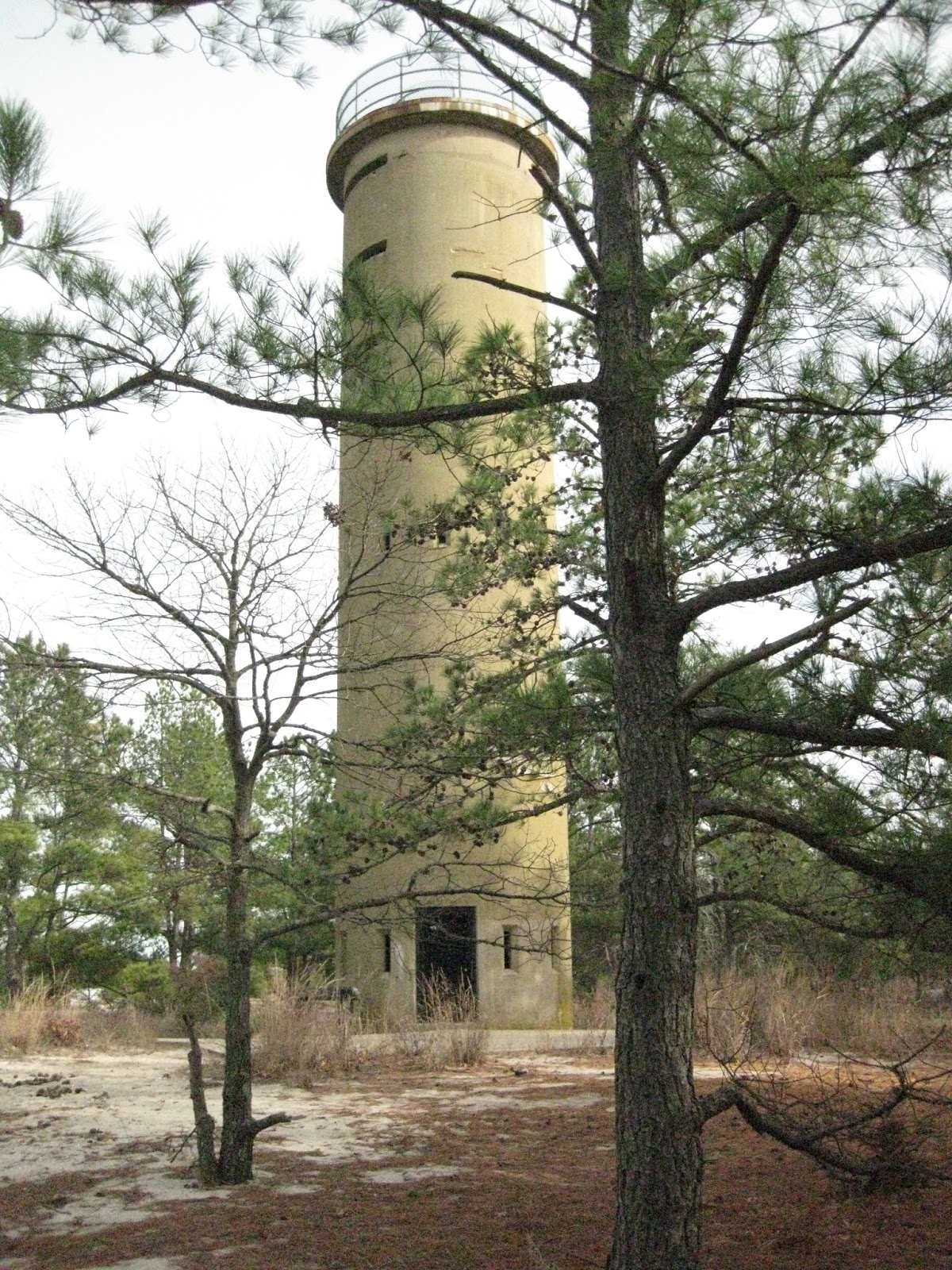
The park is on the site of several artillery batteries designed to protect Delaware Bay during World War II. They are part of a string of coastal installations known collectively as Fort Miles.

The state has restored several buildings and an observation tower. The buildings were open today, and were empty. I was hoping to climb the tower, but the door was padlocked.


Several pieces of artillery are also on display. None, I believe, is original to the site. One, a huge 16-inch gun, was actually used by the Navy on the battleship Missouri

There’s a photo of the Japanese surrender, and according to the caption, this is the center barrel in the lower turret, which you can see in the background.

Fort Miles was built in something like two years. Some of the heavier guns were on railcars, so construction must have included putting down some track.

The place opened in 1941 and was abandoned in 1960. The pine forest has had plenty of time to grow back, so it looks like some of the artillery on display is about to attack the woods.


The park was fairly busy, considering that it was the middle of a work week in the off-season. Some of the visitors may have been retired people like me out for some exercise.

Others didn’t fit that mold. A lot of younger people, for instance.

There is a sign on the path pointing to the High Dunes Overlook, or something with a similar name. Several people seemed to be waiting up there.

I was standing next to a cannon when I found out why. Along  came a bride. No, really. All by herself, with a veil and strapless white gown, trailing her white train, carrying a corsage. 

Maybe she was model for a magazine shoot. I don’t know, but don’t think so.

It wasn’t too cold for December, but still damned cold to be strolling outdside with naked shoulders. But she was doing it. 

I was watching her when a photographer stepped out to take her portrait. I got the hell out of the background as fast as I could.

Historic Lewes (two syllables, by the way, like “Louis”) isn’t far from the park, a couple of miles perhaps. It bills itself as “the first town in the first state.”

Long before William Penn named it for Lewes, England, is was a short-lived Dutch colony in the 1630s, but it was wiped out by the Lenape after only a few years.

Years later some Mennonites started a commune there. The English from Maryland came and burned the place down.


The town also has the oldest standing house in Delaware. It's a little crooked, but still in use. I think the local historical society occupies it. 

The house was built in 1665 and stands on Second Street. It’s named for Ryves Holt, not the original owner, but the most public. He was a judge and assemblyman in the mid-18th century.

The town was shelled by British ships during the War of 1812. According to a sign, the bombardment is believed to mark the first use of the Congreve rocket.

The docent at the local museum pointed out that Lewes was the first place to see the rocket’s red glare, and it also had bombs bursting in air. He’s right about that.

What it didn’t have, though, was Francis Scott Key.

The Lewes Historical Society is pretty active. It owns several buildings, including the Cannonball House, which has been turned into a maritime museum, which was closed today.

The house, at the corner of Bank and Front streets, is the last standing building in Lewes to bear scars from the War of 1812. The brick foundation was hit by a British cannonball. 

You can see where the bricks were patched. The historical society has “restored” the cannonball.


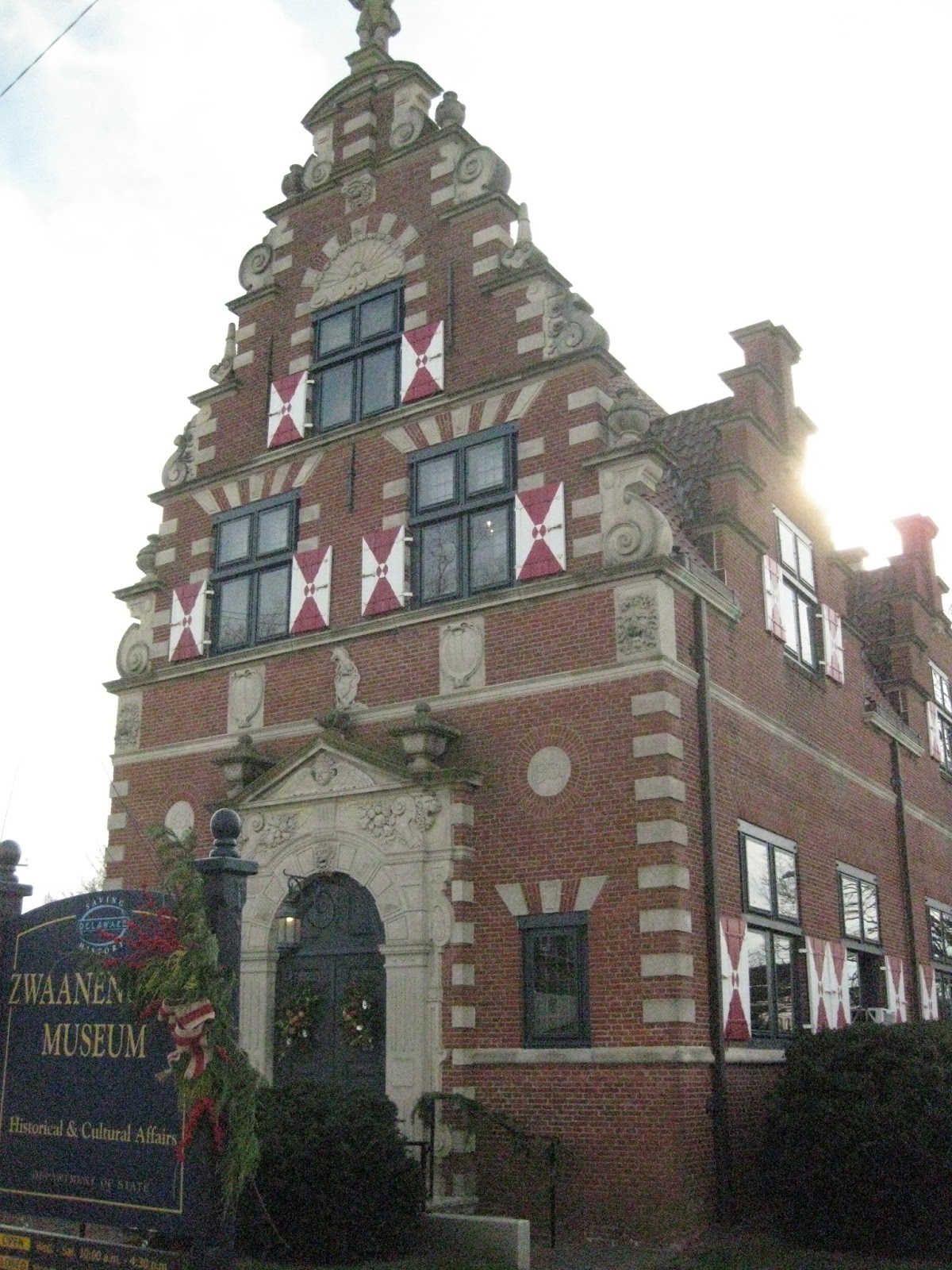
The museum is in a building based on a city hall in Hoorn, Holland. It’s a strangely decorated brick edifice standing by itself at the intersection of Savannah Road and Kings Highway.

It was originally devoted to the original Dutch colony, Zwannendael, which translates to something like “Swan Valley.” 

The building was a state public works project in 1931 marking the 300th anniversary of the first settlement. Because it’s just a few days before Christmas and we are hard by the shore, there are seashells in the wreath on the door.


The museum has two connected rooms, which are now focused on a recent find. A British sloop called de Braak went down in a squall in the 1790s. It carried too much sail for its size, and the captain may have been drunk.

Somehow, what’s left of it was discovered and brought up a few years ago.

Apparently it is a store of information about the British Navy of the time. They were surprised, for instance, to discover ceramic dishes that the enlisted men used at meals. 

There were also pieces that officers would have used. They are believed to have provided their own dinnerware, so it’s considerably fancier.

It’s pretty remarkable the shape the ceramics are in when you consider all that this stuff went through. Some bowls are just about whole. Others broke but enough pieces were found to paste together.

There were several small artifacts—buttons, brass fittings for weapons, pipe bowls, and so forth. 

About a third of the ship’s hull was recovered. The docent said it is on display in a special environmentally controlled wet room at Cape Henlopen State Park. 

I went back to Rehoboth Beach for dinner. Next to its brew pub, Dogfish Head operates a restaurant called Chesapeake and Maine.

I didn’t confirm this, but suspect that the name reflects the menu, which is heavy on oyster, crab, and lobster.

I hadn’t eaten since breakfast, so I had to be careful. I get so hungry that I want to order one of everything. 

So I ordered one smoked lobster deviled egg. When it came, it had a tail of parsley and very thin slices of radish on top. It looked like a toy beetle.

It was smoky and delicious, though. I’m not crazy about lobster, but in this it was a slight flavor perhaps. I didn’t take a bite and think “lobster.” If I come back, next time I’ll take half a dozen.

I took a flyer and ordered crab cakes. I don’t care where you are. That’s always a risk. 

More often than not you get a mealy patty with a hint of crab. I’ve been served junk like that even on the Maryland shore.

These were OK. I like huge lumps of crab barely held together by the binder. These were reasonably crabby and quite tasty. I could enjoy having them again.

They came with bacon hushpuppies and a carrot puree. The puppies had a bit of heat. The carrot was a pleasant alternative to mashed potatoes.

I had two Dogfish Head beers new to me. One is Seaquench, which the company calls a sour. It isn’t a true sour, which would use a wild yeast strain, but instead gets most of its tartness by the introduction of limes and sea salt. Nonetheless, it was a very enjoyable drink.

I also had a pint of a stout called Beer for Breakfast. It has coffee, like Founders Breakfast Stout. Unlike Founders, it has no chocolate, but adds maple syrup and scrapple.

C’mon. Scrapple in beer? I have to try that at least once. As expected, it’s a sweet stout, so I wouldn’t want to drink more than one in an evening. 

Power of suggestion may have kicked in, of course, so it was fun. I may have one again sometime.

Dec. 22

The drive home was crowded, more so than I’d expect on a Thursday morning. 

There were a few crazies out, too.

One joker in Delaware came right up on my bumper doing about 70. He was crossing behind me to reach the exit lane. 

A damned panic to get off the highway, it seemed. But no, he passed several cars on the right and, just before the exit lane veered off, cut in front of somebody else to keep going north.

On the Garden State Parkway near Irvington there is a really bad stretch. Northbound traffic is dividing into lanes to get to slots at the toll plaza. 

There are lanes for exact change, lanes that make change, and lanes that take Easy Pass only. Some lanes are closed. While you’re looking for the right lane to aim for, one traffic lane disappears, another becomes exit only and there is another that is merging traffic into the flow.

Somebody who wanted to get off at that exit before the toll was in the wrong lane. He stopped. Stopped dead.

The guy behind him couldn’t believe it any more than I did. We both hit the brake because we had no idea what was going to happen.

But God watches out for drunks and fools. Well, maybe not the captain of de Braak, but most of the time. That’s why I have lived to get this old. It’s also why there was no collision right then.

A little farther up the Parkway, someone else wasn’t so lucky. His car had been rear-ended and there was just a gaping hole where his trunk used to be.

Bad for the car, but good for the driver. The destruction of the trunk absorbed a lot of the crash energy. That’s why there was no ambulance at the scene. A man who may have been the driver was standing next to the wreck and talking to a policeman. 

Somebody managed to drive an SUV clear off the exit ramp between Interstate 80 and U.S. 46 in Wayne. A wrecker, protected by two police cars, was pulling the vehicle out of the woods.

The wreck was almost facing the wrong way. I wonder how the driver managed that.

I got back to Fairfield in one piece. I just finished some eggplant parm and a salad from Hollywood Pizzeria. I am drinking cheap Chianti. Life is sweet.

So remember now: It’s all right to be a little foolish (or drunk) now and then. God’ll watch out for you.

Good night all.

Harry


Sunday, January 1, 2017

Dogfish Pilgrimage


December 19

I’ve been whisked away to Delaware, just like Wayne and Garth. It’s not as improbable a destination as it sounds at first. The Dogfish Head brewery is here. It turns out some the best ales made in perhaps the world.

It’s not hard to find: the Garden State Parkway to the New Jersey Turnpike to the Delaware Memorial Bridge, a short stretch of I-95 to Delaware State Highway One. That’s a drive of three and a half hours to the Sleep Inn in Lewes. 

About five miles south is Rehoboth Beach, where Dogfish Head has two restaurants. 

Maybe 10 miles the other way is the brewery.

After I checked in, I went to the brewpub, officially Dogfish Head Brewing and Eats, in Rehoboth Beach. 

Larry went to grad school down here, so when I told him where I was going, he grew immediately nostalgic, and that’s how I learned to pronounce “Rehoboth.” Stress is on the second syllable. “Ho” is the Cantonese equivalent of “good.” And how.

The street is dark and most of the signs are dim, so I had to make a couple of tries to find the place. I drove all the way to the beach and then came back up the other side before I saw a shark on the sign.

It was worth the trouble.

I had a juicy steak with potatoes and carrots on the side. Of course, food merely helps me stay alive. Beer is what makes it fun.

They had beers on tap I had never heard of. Alternate Takes 3 is an India pale ale with a citrus edge. The bartender said it is made with citra hops and has no citrus fruit in the mix.

Two of my favorite Dogfish Head ales are the 60 Minute and 90 Mintue IPAs. They are named for the brewing times. The longer they’re simmered, the stronger the ale.

The bar had a 75 Minute IPA, a blend of the 60 and the 90. It was a cask ale, meaning that it was naturally carbonated in the keg. It came across as not too strong, but had a familiar Dogfish Head flavor.

Auto Reverse is described as a Belgian syle ale using yeast with clove and pepper notes. It brews for an hour with Simcoe and Palisades hops. The result is a strong, mouth-filling flavor. 

I came back to the Sleep Inn with a four-pack of Midas Touch. This is an ale with a mix of fruit flavors in the background.

They call it an ancient ale, and similar to some of the Sierra Nevada ancients, the recipe is the result of analyzing drinking vessels from antiquity. The ones used for this ale were supposedly from the court of King Midas.

It was on the sweet side, but I loved it. Maybe that’s the power of suggestion. After all, this is the beer that King Midas drank with his steak.

Dec. 20

I stayed in the room till 2 or so to take care of personal business. Then being curious, I headed back to Rehoboth Beach to see what it looks like in daylight.

It’s about half closed up now, but it is a cute place. Lots of little businesses that appeal to tourists, clothing, jewelry, art prints, souvenirs, junk. Every third storefront advertises pizza.


The boardwalk is a mile long, and just about everything is closed there. The main street, Rehoboth Avenue, is about two-thirds open.

I wound up walking a couple of miles on the boardwalk and the avenue. So after all that sea air and exercise, I was more than ready to be my usual self.

I drove to Milton and went to the brewery. They were starting a tour when I got there. The man at the desk took me into the brewery to  join the tour that was just starting.

This was my first trip through a brewery. I had to put on safety goggles. 

I read a book decades ago about brewing and am not sure how accurate it was. If I remember right, the author said the difference between lager and ale is that one uses hops and the other doesn’t. I may be misremembering what I read so long ago, but that is definitely wrong.

The yeast for ale works at a higher temperature. I think the tour guide said they keep the vats at 67 degrees Fahrenheit. 

Lager runs cooler, somewhere in the mid-50s, and takes longer.

We saw wooden vats where some of the ales are aged. Two of them are made of a wood called Palo Santo, which comes from Paraguay.


We toured the warehouse with the bottling and kegging lines. 

Except for the cask ales, the beer in a keg is flat. It is force-carbonated at the tap. A CO2 line injects gas into the beer as it comes through the tap.

I’ve mentioned nitro beers, like Guinness. That’s where the nitrogen is introduced into the beer, at the tap.

The brewery has added a station to reclaim its brown and grey water. They put it into a huge tank and add yeast. Brewers, remember, know all about yeast.

The yeast consumes the impurities of the water and pretty much turns it into methane, the main component of natural gas. They not only clean the water, but reclaim the methane.


They flare some of the gas, but I wasn’t able to learn why. 

The tour ended back at the tasting room. On the way we passed a metal structure called the Tree House, which is the photo of the day. 

I later learned that it is a relic of a Burning Man festival. Somebody built it in the desert for the event, and then offered it for sale. The company bought it for a dollar and spent another 30,000 to have it shipped and rebuilt. 

At the bar, they give you a card and you can write the names of four beers on it. They give you 4-ounce pours of your choices.

So you get a free pint at the end of the tour.

Pennsylvania Tuxedo is a “spruce-infused pale ale.” I guess that’s what spruce tastes like, a bit sweet and astringent. It was an interesting flavor, but I’m not sure about taking a full pint of it.

I had a different Alternate Takes IPA (there are three). This one is a pale amaber liquid. It has a flowery aroma and a good balance of malt and hops.

Burton Baton imperial IPA runs about 10 percent alcohol. It was very strange. It was too sweet on the first sip and then seemed less so on the second. It has a mild spicy aroma.

Palo Santo Marron, a dark brown beer aged in those vats made of wood from Paraquay, is thick and sweet. Not so cloying as the Guinness syrup they serve in Asia, but not my favorite Dogfish Head brew. It is in the barley wine league at 12 percent alcohol by volume.

There is a block of palo santo wood behind the bar. Mike, the guy drinking next to me, asked to have it brought out. He works at the brewery.

The block is very heavy and has a pleasant fragrance. There’s a pock mark in it. Mike and the bartender told me that somebody demonstrated the strength of the wood by firing a 38-caliber hollowpoint into it. The bullet cut a dent that’s maybe a quarter-inch deep.


I stayed around for two more samples. Punkin Ale is flavored with pumpkin and spice, which are far in the background. If you weren’t looking for them, you might miss them. That’s good.

Fall on Me is a seasonal pale ale flavored with apple, spice, and other stuff. It’s surprisingly OK. The flavors blend, and it is reminiscent of an ancient ale.

Mike, by the way, claims to be the only man married in the Tree House. He and his wife were married there a year or two ago.

I stopped at a place recommended at the bar for fish and chips. It’s called Go Brit.

No Dogfish Head selections there, so I had a Fuller’s London Pride.

I’m working on a four-pack of Dogfish Head 90 Minute right now, so life is good. When I wake up, I’ll decide what I’m going to do tomorrow.

Hell, life is good even when it sucks.

Love to everybody. I hope the season is treating you well.

Harry